Sicily Wine Tour
Plan a Sicily wine tour: Etna's volcanic reds, Nero d'Avola, Cerasuolo di Vittoria, Marsala and Malvasia, with key produ
Plan a Sicily wine tour: Etna's volcanic reds, Nero d'Avola, Cerasuolo di Vittoria, Marsala and Malvasia, with key producers, routes and pairings.
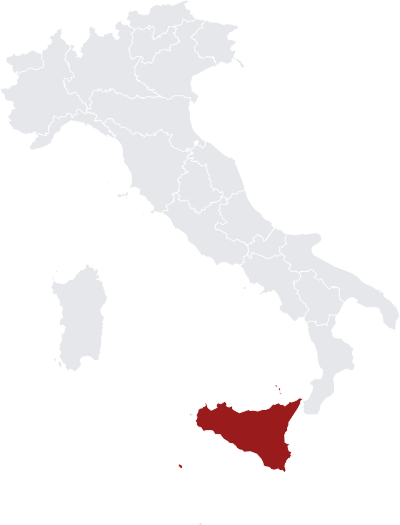
Sicily is one of Italy's most exciting wine destinations. It is a sunny island with old local grapes, volcanic soils and a long winemaking past. A Sicily wine journey offers huge variety, from Etna's mineral mountain reds to sweet Malvasia delle Lipari and the bold, fruity Nero d'Avola of the hot south.
This guide covers the key regions, grapes, producers and wine routes to know before your first Sicilian glass.
Why Sicily Belongs on Every Wine Lover's Map
Sicily is the largest island in the Mediterranean, and its wines are shaped by extremes:
- Fierce summer heat, cooled by altitude and sea winds
- Soils that range from volcanic basalt to limestone and clay
- Local grapes found nowhere else on earth
For decades, the island was mainly a source of bulk wine. It was shipped north to bulk up thin harvests on the Italian mainland. That has completely changed.
Since the 1990s, a new wave of ambitious producers has turned Sicily into one of Italy's most exciting fine wine regions. Some are local families, others are outsiders drawn by the land. Today the island makes everything from long-lived volcanic reds to fresh, mineral whites and world-class sweet wines.
The Etna Wine Route: Italy's Volcanic Frontier
No Sicilian wine gets more attention right now than Etna Rosso. Mount Etna is an active volcano on Sicily's northeast coast, rising over 3,300 meters. Its red wines are made from Nerello Mascalese, and they are often compared to Burgundy's Pinot Noir. They are pale, high in acid and very fragrant. Each one is shaped by its contrada, the local volcanic district where the vines grow.
The wines grown on volcanic soils here often come from old pre-phylloxera vines, some over a century old. They grow at 400 to 1,000 meters. The volcanic basalt drains fast and pushes roots deep. It gives the wines an ashy, smoky minerality that no other Italian region matches.
Essential Etna Producers
- Benanti was one of the first to show Etna's serious potential. Its single-contrada wines, Rovittello and Moganazzi, are still benchmarks.
- Cornelissen makes daring natural wines from century-old vines on the north slope. Bottles like Munjebel Rosso have a cult following around the world.
- Passopisciaro works only on the north slope, making wines from single contrade.
- Terre Nere (now part of a larger group, but still focused on quality) helped introduce Etna to US and UK drinkers in the mid-2000s.
Expect to pay $30–$60 for entry-level Etna Rosso DOC, and $80–$150 or more for single-contrada wines from top producers. The wines reward patience: after five to ten years in the cellar, they gain a lot of depth.
Nero d'Avola and the Val di Noto Wine Route
If Etna is Sicily's cool, cerebral north, the southeast is its warm, generous side. Nero d'Avola is the island's best-known red grape abroad. It grows across much of eastern and southern Sicily. Its richest wines come from around Noto, Pachino and Avola in the Val di Noto.
The grape makes dark wines with notes of ripe black cherry, dried fig, tobacco and chocolate. Made with care, it can be complex. Made carelessly, it can be heavy and overripe. The best Nero d'Avola wines balance richness with freshness and age well for eight to fifteen years.
Key producers:
- Cos, whose Cerasuolo di Vittoria is covered below
- Gulfi, whose single-vineyard Nero d'Avola wines are among the island's best
- Planeta, whose easy-drinking, widely sold versions have introduced the grape to millions of drinkers abroad
The Val di Noto wine route links Noto, Ragusa and Modica. All three are baroque towns on the UNESCO World Heritage list. Few trips in Italy combine wine, architecture and food so well.
Cerasuolo di Vittoria: Sicily's Only DOCG
Sicily has just one DOCG: Cerasuolo di Vittoria. It is a red blend from the provinces of Ragusa and Caltanissetta. It mixes Nero d'Avola (50–70%) with Frappato (30–50%).
The wine is lighter than pure Nero d'Avola. It has a bright cherry color ("cerasuolo" means cherry-colored) and lively acidity. Frappato adds a floral, delicate touch.
Cos makes the benchmark Cerasuolo di Vittoria Classico. It is farmed biodynamically, ages well and clearly shows the limestone soils of the Vittoria plain. Valle dell'Acate is another reference producer. Prices usually run $25–$50, which makes this one of Sicily's best values. If you visit Ragusa, tour these wineries during the late-September harvest.
Marsala and the Western Wine Route
Western Sicily, around Trapani and Marsala, is a very different wine trip. Marsala is a fortified wine named after the city. For decades it was out of fashion, seen as cheap cooking wine. But serious Marsala from producers like Marco De Bartoli is a world-class fortified style. De Bartoli's Vecchio Samperi is an unfortified, oxidative wine aged in a solera. It rivals the best Sherry and Madeira.
The west coast also makes very good white wines from Grillo, Catarratto and Zibibbo (Muscat of Alexandria). Among wines from Italian islands, few are more distinctive. These fragrant, textured whites are great with tuna, couscous and swordfish, the core of western Sicilian cooking.
Malvasia delle Lipari: Jewel of the Aeolian Islands
Thirty kilometers off Sicily's north coast, the Aeolian Islands make one of Italy's most prized sweet wines: Malvasia delle Lipari. The volcanic island of Salina is its heartland. Malvasia grapes are dried in the sun to make an amber passito. It tastes of apricot jam, candied orange peel, saffron and honey. It is thick and rich, but fresh acidity keeps it from being cloying.
Carlo Hauner built the modern reputation of this wine, and the estate still makes reference-level Malvasia. Fenech is another name to look for. A 375ml half-bottle usually costs $30–$50. Serve it lightly chilled with almond pastries, ricotta cannoli or aged Sicilian pecorino.
Food Pairing: Sicilian Cuisine and Wine
Sicilian food is made for wine:
- Slow-braised rabbit with olives and capers: Etna Rosso
- Pasta alla Norma with eggplant and salted ricotta: Cerasuolo di Vittoria
- Grilled swordfish with citrus: crisp Grillo or Catarratto
- Arancini: young Nero d'Avola
Don't miss the street food of Palermo's Ballarò market. Thanks to the island's Arab-Norman past, sweet-and-savory dishes are everywhere. Malvasia delle Lipari, or even a dry Zibibbo, matches those flavors easily.
Planning Your Sicilian Wine Tour
The best time to visit is September to October, when the harvest is on and most estates welcome visitors. The drive from Etna through Ragusa to Marsala takes five to seven days at a relaxed pace. Many estates offer tastings by appointment. Planeta runs estates across the island with well-organized visits, so it is an easy first stop. For the Aeolian Islands, hydrofoils run often from Milazzo.
To choose bottles for a trip or a cellar, start with our best Sicily wines guide. It shows the best producers and appellations to begin with, by style and budget.
Explore More
Sources
Production rules and official information from the consortia of the wines in this guide:
- Cerasuolo di Vittoria DOCG · cerasuolovittoria.it